







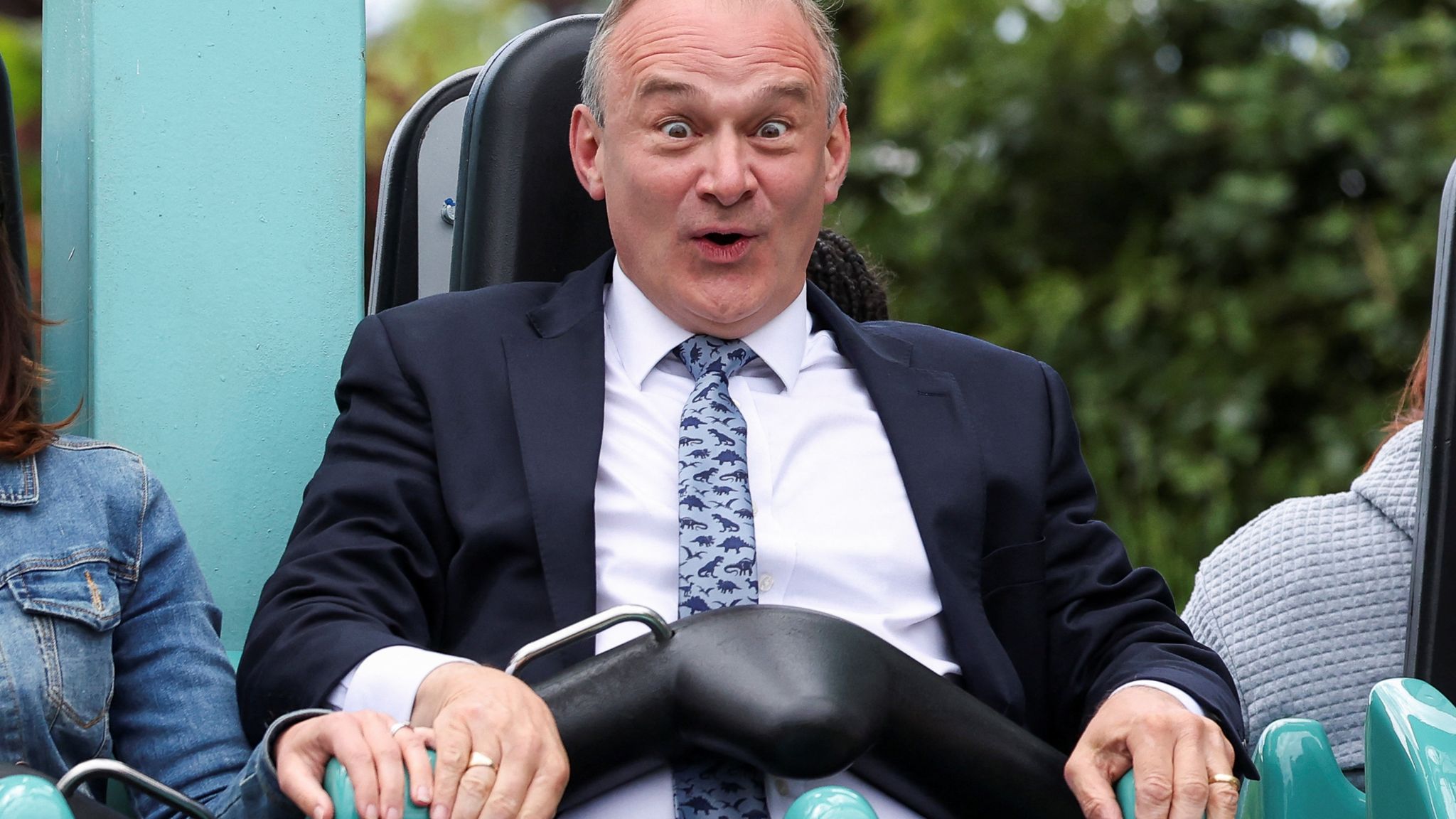
The Liberal Democrats, commonly known as the Lib Dems, are a centrist political party in the United Kingdom. Formed in 1988 from a merger between the historic Liberal Party (dating back to 1859) and the Social Democratic Party, they position themselves as an alternative to the dominant Conservative and Labour parties.
With over 90,000 members and led by Ed Davey as of 2026, they became the third-largest party in the House of Commons following significant gains in the 2024 general election, where they won 72 seats.
The party emphasises community-focused politics, often portraying themselves as "strong local champions" who prioritise practical solutions over ideological extremes.
What Is the Point of the Liberal Democrats?
The core purpose of the Liberal Democrats, as outlined in their party constitution, is "to build and safeguard a fair, free and open society, in which we seek to balance the fundamental values of liberty, equality and community, and in which no-one shall be enslaved by poverty, ignorance or conformity."
They aim to restore trust in politics by focusing on people's priorities, such as economic stability, environmental protection, and fixing crises in healthcare and social care.
In the broader UK political landscape, they serve as a progressive, internationalist voice—often scrutinising the government (currently Labour-led) while competing with parties like Reform UK for voters disillusioned with the status quo.
Their role includes advocating for under represented groups, like carers, and pushing for reforms that promote fairness, opportunity, and community empowerment.
Historically, they've participated in coalitions (e.g., with the Conservatives from 2010–2015) and continue to emphasise cross-party collaboration on issues like environmental action and human rights. 
What Do They Stand For?
The Liberal Democrats are rooted in liberal values such as freedom, equality, community, internationalism, human rights, environmentalism, and democracy.
They advocate for an open, outward-looking Britain that thrives through global engagement. Their policies, as detailed in their "For a Fair Deal" plan (originally from the 2024 manifesto but still central as of 2026), focus on delivering practical improvements in daily life while addressing long-term challenges like climate change and inequality.
Key stands include:
- Healthcare and Social Care: Prioritising fixes to the NHS crisis, ensuring high-quality care, and supporting carers (a personal focus for leader Ed Davey). They push for better mental health services, public health initiatives, and dignified social care to allow independent living.
- Economy and Business: Promoting economic security, fairness, and growth through pro-business measures like reforming business rates, overhauling the apprenticeship levy, reducing energy bills, and fostering innovation. They emphasise rewarding hard work and making the UK attractive for investment.
- Environment and Climate: Urgent action to reach net zero emissions, protecting natural spaces, ending sewage scandals, and supporting sustainable farming. They integrate climate action into industrial strategy and advocate for clean energy revolutions.
- Education and Young People: Investing in children's futures with better access to education, skills training, and opportunities regardless of background.
- Housing and Communities: Ensuring affordable, decent housing; empowering local governments with more resources; and building safe, connected communities through improved transport and crime prevention.
- International Relations and Europe: Strong internationalists who oppose Brexit and aim for eventual EU rejoining (or closer ties like a customs union). They support human rights, a fair immigration system, robust defence, and liberal values globally.
Rights and Political Reform:
Protecting individual liberties, tackling inequality, reforming politics to end sleaze, and promoting equality across society.
Overall, the party aims to create a society where everyone has the freedom and support to succeed, with a focus on evidence-based, community-driven solutions rather than divisive rhetoric.
How do the lib dems stand on immigration, legal and illegal?
The Liberal Democrats (Lib Dems) maintain a broadly pro-immigration and humanitarian stance on both legal and illegal/irregular immigration, rooted in their commitment to dignity, respect, fairness, and international obligations like the Refugee Convention. As of January 2026 (following their 2024 manifesto "For a Fair Deal," 2025 party conference motions, and ongoing positions under leader Ed Davey), they position themselves as offering a liberal, rights-based alternative to the tougher approaches of Labour, Conservatives, and especially Reform UK.
They describe the UK's immigration system as "broken" by years of Conservative mismanagement, leading to backlogs, family separations, and dangerous irregular crossings. Their core goal is a "fair, effective immigration system that treats everyone with dignity and respect," emphasising safe legal routes, faster processing, and international cooperation over punitive measures.
Stance on Legal Immigration
The Lib Dems view legal migration positively, highlighting the UK's "proud history of welcoming newcomers" and the economic and social benefits of immigration. They advocate for reforms to make the system more flexible, humane, and aligned with workforce needs, while acknowledging that overall levels are currently "too high" (a position Ed Davey has stated, though they argue their policies would not increase net migration overall).
Key elements include:
- Replacing arbitrary salary thresholds for skilled worker visas with a more flexible, merit-based system tailored to sector needs (in collaboration with employers and linked to long-term skills/training strategies).
- Supporting key sectors like healthcare: Exempting NHS and care staff from the Immigration Skills Charge, reversing bans on care workers bringing family members, and lowering income thresholds for family reunification visas to promote unity.
- Expanding schemes like the Youth Mobility Scheme (e.g., reciprocal EU deals, raising age limits, abolishing fees, extending duration).
- For EU citizens post-Brexit: Granting automatic Settled Status to those with Pre-Settled Status and providing physical proof of residency.
- Overall, they support evidence-based immigration that benefits the economy, counters skills shortages (e.g., through better domestic training), and upholds family rights.
They have consistently opposed "hostile environment" policies and pushed for reforms that make the system simpler, clearer, and fairer.
Stance on Illegal/Irregular Immigration (e.g., Small Boats, Asylum Seekers)
The Lib Dems are strongly critical of irregular arrivals like small boat crossings, which they blame on the lack of safe legal routes, closed pathways, and failures to tackle smuggling gangs. They pledge to "stop the boats" but through humanitarian and practical means rather than deterrence-focused policies like deportation to third countries.
Key positions include:
- Scrapping the Illegal Migration Act 2023 and the "unworkable" and "immoral" Rwanda scheme (which they argue breaches international law, is expensive, and ineffective).
- Declaring asylum processing a national emergency (as announced at their 2025 conference): Setting up "Nightingale"-style processing centres, doubling/tripling caseworkers, clearing the backlog within six months, and aiming for decisions in three months for most cases.
- Allowing asylum seekers to work if they've waited more than three months for a decision (to reduce costs to taxpayers, prevent destitution, aid integration, and allow contributions to the economy; they've repeatedly pushed amendments for this in Parliament).
- Expanding safe and legal routes for refugees: Including humanitarian travel permits, properly funded resettlement schemes, family reunion (especially for unaccompanied children), and new schemes to prevent perilous journeys.
- Tackling root causes via international cooperation: Working with partners (e.g., Europol, France) on joint operations against smuggling gangs, returns agreements, and addressing why people feel compelled to cross irregularly (they link some issues to Brexit ending EU return agreements).
- Upholding the Refugee Convention: No punishment for how people arrive, humane treatment, reduced detention (last resort only, with time limits), and ending child detention.
In 2025, Ed Davey emphasised coordination with international partners to reduce claims and "stop the boats" at source, while rejecting divisive rhetoric and defending rights-based approaches. They argue that more legal pathways, faster decisions, and anti-trafficking efforts would meaningfully reduce irregular migration without compromising humanitarian principles.
In summary, the Lib Dems stand out for their emphasis on compassion, efficiency, and internationalism in immigration policy—welcoming controlled, skilled legal migration while addressing irregular flows through safe routes and system fixes rather than deterrence or offshore processing. This positions them as more progressive than the main parties on asylum and rights, though they acknowledge public concerns and the need for effective border management. Their policies remain centred on the 2024 manifesto with 2025 conference updates, as no major overhaul has been announced in early 2026.